“I am probably the only one here who has done duty in a space station. Gentlemen, the costume we are now wearing is customary in a station. A man fully dressed would stand out like an overcoat on the beach.”
The Puppet Masters by Robert A. Heinlein
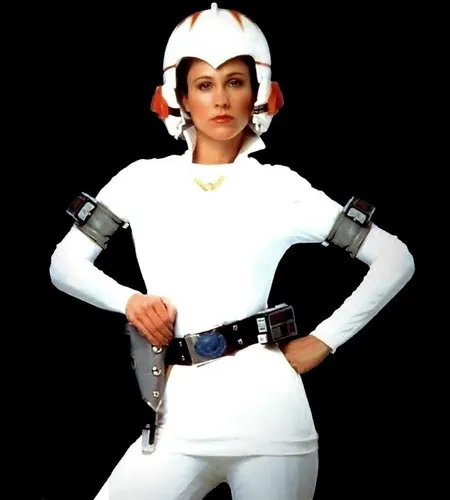
I was recently watching a Gundam movie. Unlike most science-fiction, the crews of the spaceships were in micro-gravity and floated about the interior.
Now, I appreciate a nice pair of legs and a short skirt, but even I will admit it would not be the best outfit for such conditions.
The boys in the movie would have fared little better. Many wore nineteenth century-style uniforms. Those long tails and jacket skirts would not have stayed in place without gravity to pull them down.
In THS, there is no anti-gravity, nor are there gravity generators. There are, however, lots of space vessels and space habitats.
Traditional clothing styles and uniforms may not be ideal for wearing in micro-gravity/free-fall areas.
One consequence of micro-gravity conditions is clothing will not drape as it does on Earth. Various parts of a garment will tend to float away from the skin, forming unintended configurations and exposures.
A human floating in micro-gravity tends to adopt a “neutral” position that has been likened to that of a snowboarder.
Knees and shoulders tend to rest in a forward position. Legs also rest in a semi-seated position.
This posture tends to pull on clothing at the back of the waist and compress the clothing at the front. If wearing conventional “earthwear” garments, this may result in the small of the back being exposed as shirts and jackets ride up, and waistbands slip down.
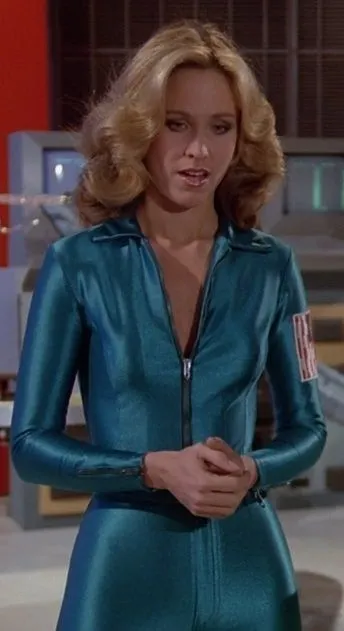
Jumpsuits
Jumpsuits are the current NASA solution to what to wear in micro-gravity.
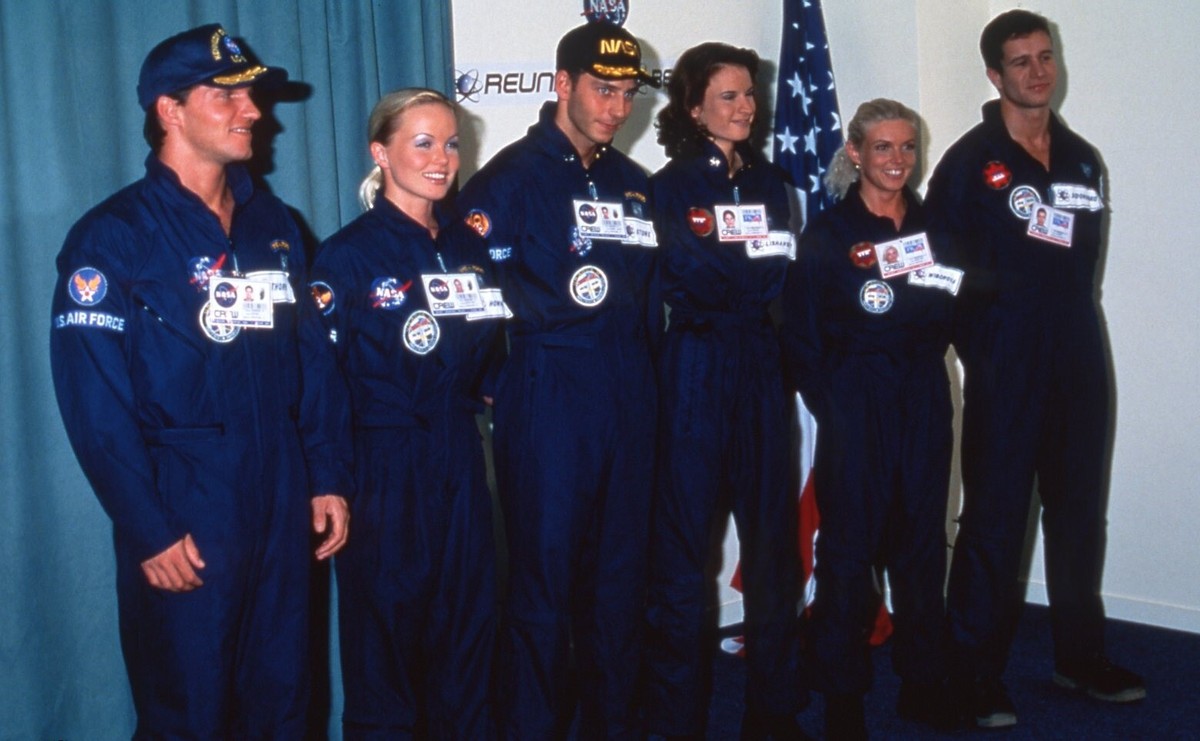
Being close fitting, they tend to stay in place. There is no possibility of the lower back becoming exposed.
On the other hand, they do not, as far as I am aware, have a “bomb hatch”, so must be removed if the wearer wants to use the evakuitorie.
A zero-gee toilet is probably complicated enough without needing to disrobe every time you wish to use it!
Tightfit
One solution to the behaviour of clothing in micro-gravity is to have items close‑fitting and with a degree of stretch.
The various Star Trek incarnations and “Buck Rogers in the 25th Century” generally favoured pullovers and snug fitting outfits for uniforms.
While micro-gravity was not a major concern in these shows, these features would work well in times before the adoption of gravity plating.
In the “Sector General” series of novels, human medical staff wore close‑fitting outfits since their duties often required them to easily don various types of environmental or protective suit.

Shirtsleeves
Many space vessel or habitat interiors are likely to be kept at a comfortable temperature, so clothing may be little more than trousers with a shirt or jumper.
To accommodate the free-fall neutral posture, shirts are likely to be cut to be longer at the back.
Many shirts and pullovers will resemble bodysuits, being snug fitting and featuring crotch straps to ensure that garment does not ride up.
Garments worn outside the waistband may have crotch straps, or some means of attaching them to the trousers such as buttons, poppers or velcro.
Trousers
Trousers may need some measures to ensure their cuffs do not ride up when there is nothing to keep them down.
Open trouser cuffs will also cause clothing to “balloon”.
Trouser cuffs may be elasticated or provided with velcro straps to secure them in place. Trousers with stirrups, as is seen with some tracksuit bottoms, are another option.
Some militaries are obsessed with blousing trouser bottoms, so we will probably see this dress requirement reaching orbit and beyond. Anklets, gaiters and puttees are possible military and civilian fashions.
Footwear such as tabi-mox may be designed so that trouser bottoms may be securely tucked into them.
Tights and yoga pants will be alternatives to looser leg-wear.
“Fallwear” trousers will be tailored to have a low cut waistband at the front and high at the rear to compensate for the micro-gravity neutral posture, and to reduce the likelihood of the lower back area becoming exposed.
Sweat pants will also favoured as micro-gravity wear by some.
Skirts
Skirts, trenchcoats and cloaks will not be very practical in micro-gravity.
Without wind and gravity, Superman's cloak will move randomly when flying through space!
Micro-gravity will prove a challenge to religious and cultural groups that favour long and/or flowing garments.
Wearing a skirt (or kilt) will need some kind of internal framework to keep it in shape and position.
One is reminded of a shuttlecock.
Tunics
An additional layer may be worn over the shirt or jumper for various reasons. It may be used for added warmth, protection or for greater formality.
A jacket worn unfastened at the front will not be practical. It will billow open and the skirts will float around.
Such a garment will need to be kept fastened, and might be better termed a “tunic” rather than a “jacket”.
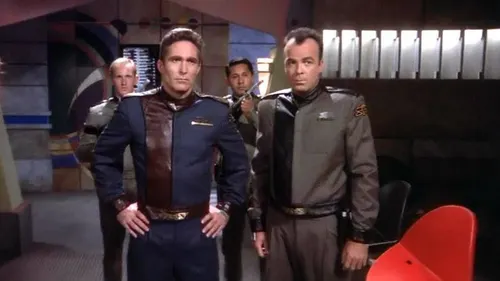
A fallwear tunic may fasten up the front, rather like the top of a Neru suit, or be an overhead design, like a Korean dobok.
Since the front of the garment must be kept fastened, many tunics may include “pit‑zips” for ventilation. Mesh‑lined pockets may also utilized for increased airflow.
Traditional suit jacket skirts and quarters will float around in micro-gravity.
The lowermost hem of a fallwear tunic will need to be elasticated or have a drawcord to secure it.
Most fallwear tunics will be cut longer at the back than the front to accommodate the micro-gravity neutral posture.
Fallwear tunics will have the shoulder regions designed to allow a wide range of arm movement. This is an important consideration when moving in micro-gravity.
This is in contrast to the shoulder areas of a traditional earthwear suit jacket, which looks outlandish if the arms are raised above chest level.
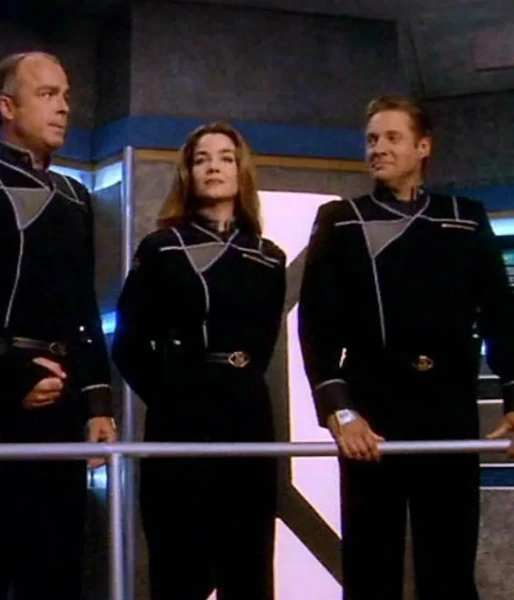
To keep them in place, most tunics may include crotch fastening.
This is either a single broad band, or a pair of narrower bands, one to each side.
The two band arrangement is favoured by some males since it allows the trouser zipper to be used without undoing the crotch straps.
Straps are generally secured by hooks, poppers or velcro, buttons being considered somewhat fiddly for this region.
In some garments, the crotch straps are concealed, while others make a feature of them.
Collars and Cuffs
Loose cut sleeves will need to be gathered in at the cuff to help keep them in position.
Cuffs will either be elasticated or have some form of fastening such as velcro or poppers.
Some garments feature extra long sleeves with a thumbhole or finger loop in the manner of Japanese kote or tekkou.
Typically, the sleeves of inner garments are worn longer than those of the tunic. The inner sleeve projects slightly beyond the cuff or the tunic to reduce soiling of the latter.
The collar of a garment may provide a means for air to enter the garment, causing a ballooning effect that lifts the shoulders and collar upwards towards the wearer’s head. This tendency is partially prevented by the crotch fastening.
Some collar types will work better in micro-gravity than others.
Turtlenecks and mockturtle collars fit snugly around the neck. These may include poppers, laces or zips in the manner of a Norwegian Army shirt to allow some control of ventilation.
Large collars or stand and fall collars may not stay in the desired shape in micro-gravity unless stiffened.
Small stand collars such as the Neru or mandarin, or shawl collars, may be more practical than more traditional earthwear.
Footwear
Conventional shoes are not needed in micro-gravity.
Many spacers find it an advantage to be able to use their toes for gripping.
For some parahumans and bioroids, their feet are actually extra hands.
Tabi-mox are widely worn by those who spend most of their time in micro-gravity.
Some spacers instead choose to go barefoot.
Spacer tabi (THS Toxic Memes, p.89) are often worn, and are particularly useful for environments where the wearer may have to alternate between micro-gravity and rotational gravity conditions.
Neckwear
Neck ties are impractical in micro-gravity.
Ascots, cravats or neck-scarves may sometimes worn.
In addition to their decorative function, they help reduce the tunic collar becoming soiled if the shirt beneath lacks a suitable collar.
Hair
Unbound long hair may be an inconvenience in micro-gravity. Doubtless most people who spend a significant time in space will favour short hairstyles.
For those that retain long hair, for whatever reason, there are several options.
One is braiding the hair, which may constitute quite elaborate hairstyles held with various pins, barrettes and combs.
Certain types of headgear may be designed to contain long hair.
For example, an oversized beret that also works as a hairnet. The Jamaican tam or “rastacap” is an example of a similar item already in use as earthwear.
Headwear
Some forms of headwear will be more suitable for use in micro-gravity than others.
A knitted beanie cap is likely to stay in place under most circumstances. Other types of earthwear headgear have more of a reliance on gravity to stay on.
If you want to wear a Stetson, you will need a hat‑strap.
Bare As You Dare?
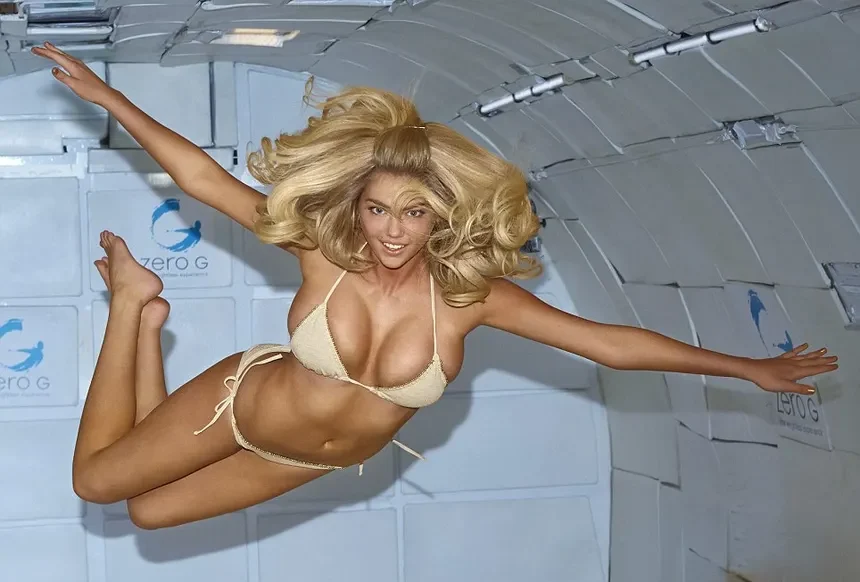
Many space vessel or habitat interiors will be kept at a temperature where most occupants can wear just shirtsleeves or shirtsleeves and a tunic.
This will not always the case.
Some vessels or habitats lack the resources to achieve this. In certain cases, it is more practical for occupants to wrap up warm rather than heat large, mostly empty spaces that are seldom occupied.
In contrast, some vessels or habitats maintain a much higher internal temperature. Occupants may wear little more than shorts and sports bras.
Naturalist vessels and habitats are also known.